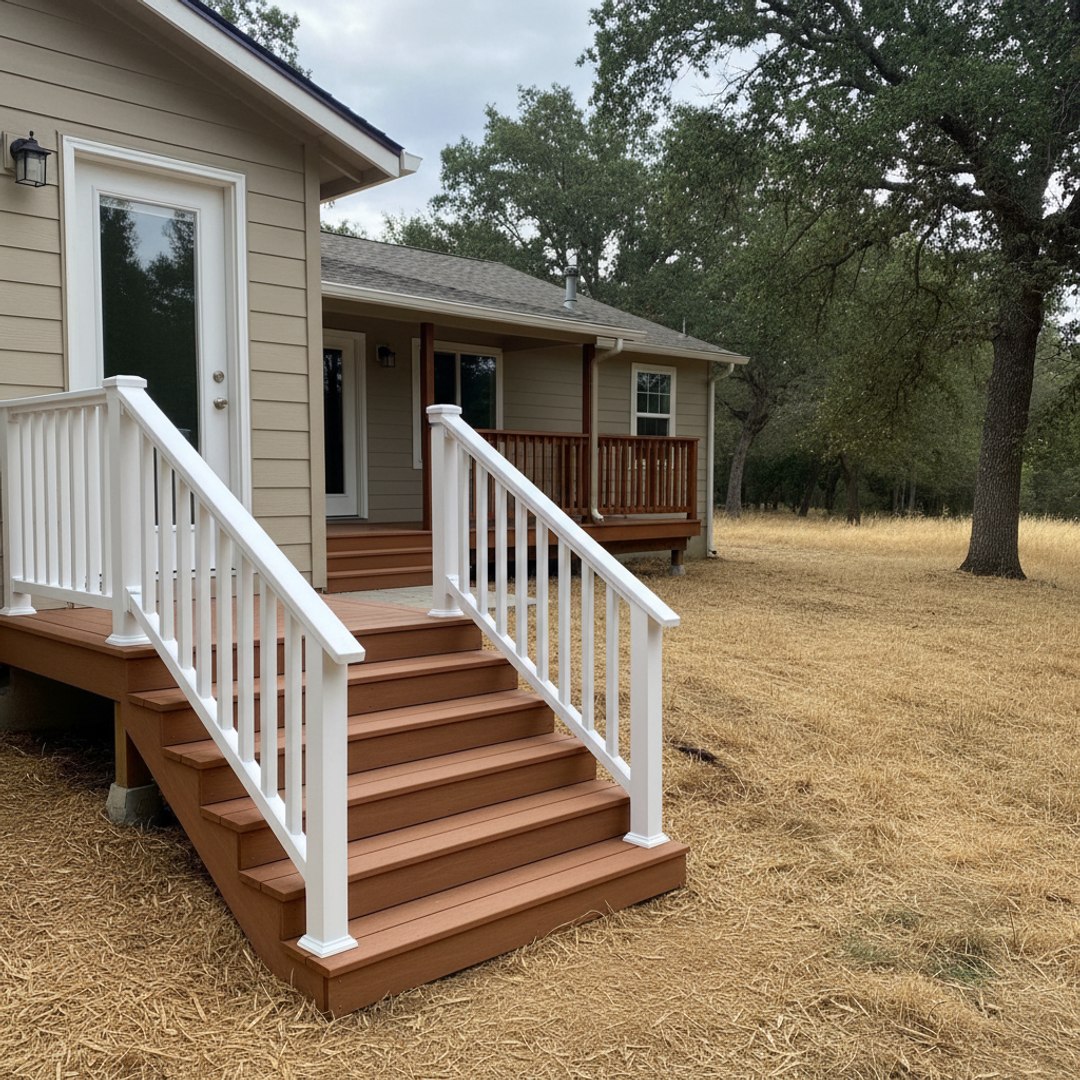
Anaheim gets a strange mix of deck problems. You've got flatland lots on old adobe clay that swells and shrinks with the seasons, and you've got Anaheim Hills lots on steep grade where a deck is really a small bridge over a slope. A builder who's only ever done one of those jobs well can still get the other one wrong. Here's what actually separates a builder worth hiring from one you should walk away from.
Check the license, not just the truck wrap
A contractor building or structurally repairing a deck in California needs a CSLB license, usually a B General Building classification, sometimes a C-5 for framing and structural work. Ask for the license number and look it up yourself on the CSLB website before you sign anything. It takes two minutes and tells you if the license is active, what class it is, and whether there are complaints against it. Also ask for proof of workers' comp. Deck framing means guys on ladders with nail guns and circular saws, ten feet off the ground on a hillside lot. If someone gets hurt on your property and the contractor has no comp coverage, that liability can land on you.
Understand what the permit process actually covers
Most attached decks in Anaheim need a permit through the city's Building Division, and any deck over 30 inches above grade needs one for sure, guardrail requirements kick in at that height too. A legitimate builder pulls the permit, doesn't ask you to pull it yourself so they can skip the paperwork. Inspections typically happen at two or three points: footing depth and rebar before the concrete pour, framing before the decking goes down, and a final once railings and stairs are in. If you're in an HOA community, common in newer parts of Anaheim Hills and around the Resort area, you'll also need architectural approval before the city permit even gets submitted. Older flatland neighborhoods like the Anaheim Colony area mostly don't have HOAs, but a lot of those lots have setback lines and easements from the original 1950s tract survey that still matter.
Ask how they're handling the ground under the deck
This is where a lot of Anaheim decks fail, and it's usually invisible until it isn't. The clay soil across much of the flatland part of the city expands when it's wet and contracts hard when it dries out, and Anaheim's rain mostly comes in short, heavy bursts between December and March with nothing the rest of the year. That cycle heaves and drops footings if they're not poured deep enough or wide enough. A good builder digs footings 12 to 18 inches down depending on soil report and local code, sets posts on top with a standoff base bracket so the wood never sits in wet soil or touching concrete directly. Anyone who tells you they're setting posts straight into the ground, or pouring a shallow footing to save a day of labor, is building you a deck that will start rocking within a few years. On hillside lots in Anaheim Hills, ask whether they're using engineered footings sized for the slope, not the same generic footing they'd pour on a flat backyard.
Look at the framing details, not just the finished decking
Anyone can screw composite boards down and make it look good in photos. The framing underneath is where the real decision-making happens. Joists should be 16 inches on center for most residential loads, closer if you're planning a hot tub or heavy furniture. The ledger board, the piece that bolts the deck to your house, needs through-bolts or structural lag screws, not just nails, and it needs proper flashing behind it so water doesn't wick into your house's rim joist. That flashing detail is the single most common failure point on decks I've seen come apart in this area, because it's invisible once the decking's on and it's the first thing a corner-cutting crew skips. Ask your builder directly: how are you flashing the ledger, and what fasteners are you using. If they can't answer in plain language, that's your answer.
What to walk away from
- A bid with no line items, just one lump number. You can't compare that to anything and you can't tell what they're skipping.
- A contractor who wants full payment up front. A deposit is normal, the balance should follow the work.
- Anyone dismissive about permits, saying the city won't notice or it's not a big deal. Unpermitted structural work can complicate a home sale later and an insurance claim if something fails.
- Pressure to sign the same day. Real bids take a little time to put together properly.
- No mention of soil, drainage, or footing depth at all in the conversation. If they're not talking about what's under the deck, they're not thinking about it.
Wood, composite, and what the sun here does to both
Anaheim summers run well past 90 degrees for weeks at a time, July through September, with strong UV and very low humidity most of the year. Untreated or poorly sealed wood dries out, cups, and splits faster here than in wetter climates, so if you're going with real lumber, ask what stain or sealer schedule they recommend and how often it needs redoing, usually every one to two years depending on sun exposure. Composite decking handles the UV better and won't splinter, but it still needs proper ventilation underneath, at least 12 inches of clearance in most cases, or heat gets trapped and some composite boards can warp over time. A builder who's actually installed both materials in this climate will have an opinion on which one fits your yard's sun exposure, not just whichever one they happen to have a supplier discount on that month.
Getting bids from two or three licensed builders, checking their license status, and asking pointed questions about footings and flashing will tell you more than any amount of reading reviews. If you want to see how we handle these details on actual Anaheim jobs, from hillside footings to ledger flashing, take a look at our deck builder work.