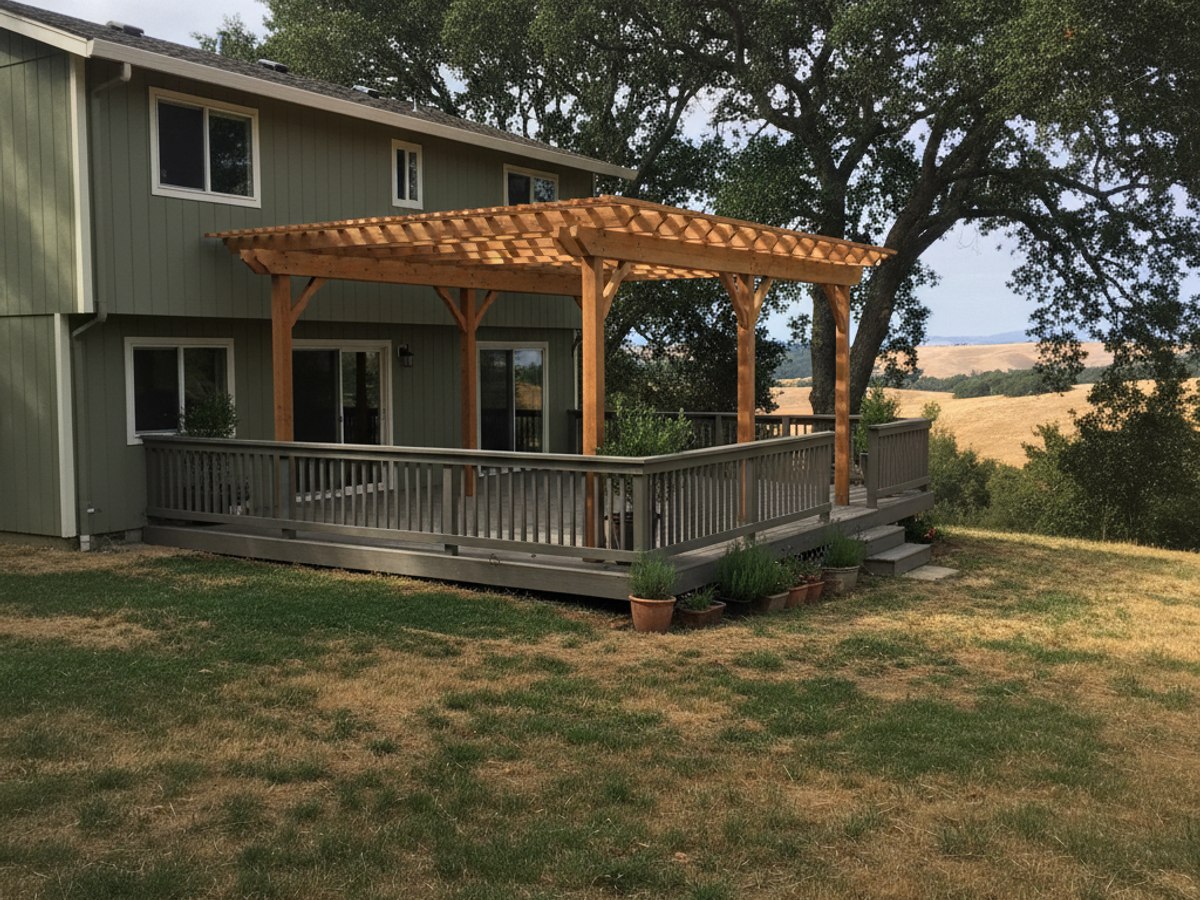
People ask us if there's a deck season here the way there is in places that get snow. There isn't, not in the way you'd think. Anaheim doesn't freeze, footings don't heave, and you can pour concrete in January if you have to. But the calendar still matters. It just matters for different reasons than it does in Ohio or Colorado.
The short version: late spring and early fall are the easiest months to build in. Summer works but fights you a little. Winter works too, if you plan around the rain instead of hoping it doesn't show up.
Why summer isn't the free pass people think it is
Anaheim inland heat runs hot, 95 to 105 degrees isn't rare in July and August, and that changes how materials behave. Composite decking with hidden fastener clips has more thermal expansion built into the spec than people expect, and boards installed at peak heat need wider gapping than boards installed in April or the seams close up tight and buckle come winter. Stain and sealer flash off too fast in direct 100-degree sun. You get lap marks and a coating that never really penetrated the grain, it just sat on top and dried before it could soak in. Concrete cures fast in that heat too, which sounds good until you realize fast cure without enough water in the mix means surface cracking in the footing before it ever takes a load.
None of that means summer work is off the table. It means we schedule stain and sealant jobs for early morning, we water-cure footings for the first several days instead of walking away, and we size composite gapping for the temperature at install, not the temperature we wish it was.
What the rainy season actually does to a deck build
Anaheim's wet months run roughly November through March, with most of the year's rain landing in January and February. It's not constant rain like the Pacific Northwest. It's long dry stretches broken by a handful of hard, short downpours. That pattern is actually harder on a jobsite than steady drizzle would be, because the ground goes from bone dry to saturated in a day and post holes and footing trenches turn to soup before the concrete goes in.
If you're building new, we watch the ten-day forecast closely once we start digging footings. A ledger board that goes up against the house without proper flashing, or with the housewrap lapped the wrong direction, is fine in July. Come January's first real storm, that's the ledger that lets water track behind the siding and start rotting the rim joist nobody sees until the deck starts feeling spongy near the house. Ledger flashing isn't optional in this climate just because it doesn't freeze. Wood rot doesn't need frost, it needs moisture sitting somewhere it shouldn't for a few wet weeks running.
What the ground here is actually doing under your footings
Anaheim's flatland neighborhoods, the older tract streets near the Colony historic district and the postwar grid closer to Ball Road, mostly sit on alluvial fill, sandy loam that drains reasonably well. Anaheim Hills is a different story. A lot of that hillside development from the 1970s and 80s sits over expansive clay, the kind that swells when it finally gets wet in February and shrinks hard again by August. A footing that's undersized or poured too shallow can shift a few fractions of an inch with that seasonal swing. Over a few years that shows up as a deck that's slightly out of level, a post that's started to lean, railing that doesn't line up the way it used to.
Standard footing depth for a deck post here runs 12 to 18 inches depending on the load and the soil report, deeper if you're on that hillside clay. We'd rather dig a little deeper in October, before the clay is fully saturated and before it's baked hard as brick in August, than fight either extreme.
Permits and inspections, and why timing your application matters
Anaheim's Building Division requires a permit for most raised decks, generally anything attached to the house or built more than 30 inches above grade, and that permit process usually means a plan check, a footing inspection before you pour, and a final inspection that looks hard at the guardrail height and baluster spacing. If you're in an HOA, and a fair number of Anaheim Hills communities and some of the newer planned neighborhoods near the Platinum Triangle are, you'll also need an architectural review before the city permit even gets submitted. That review can add two to four weeks by itself.
Spring is when everyone wants a deck finished before summer barbecue season, so plan check and inspection scheduling both slow down March through May. Submitting your permit in late winter, even if the actual build starts in April, tends to save you weeks of waiting compared to a spring rush application.
What we tell people who ask us to just pick a month
If it's new construction or a full rebuild, April through June or September through October give you the easiest working conditions, moderate temperatures for curing and coating, low rain risk, and less permit backlog than peak spring. If it's staining or sealing an existing deck, those same shoulder months matter even more, because you need surface temperatures in roughly the 65 to 85 degree range for the product to actually cure instead of skinning over. Repairs and structural work, replacing a rotted ledger or sistering a cracked joist, don't wait for a nice month. Rot doesn't pause for your calendar, and a joist that's failed is a safety problem now, not a spring project.
We've done footings in December and staining jobs in July, both fine when you build around the conditions instead of ignoring them. If you want an honest read on timing for your specific lot, whether that's a flatland yard with fast-draining soil or a hillside lot on clay, that's the kind of thing worth a walk-through before you set a date. You can see the range of work we handle at Charis Deck Solutions.