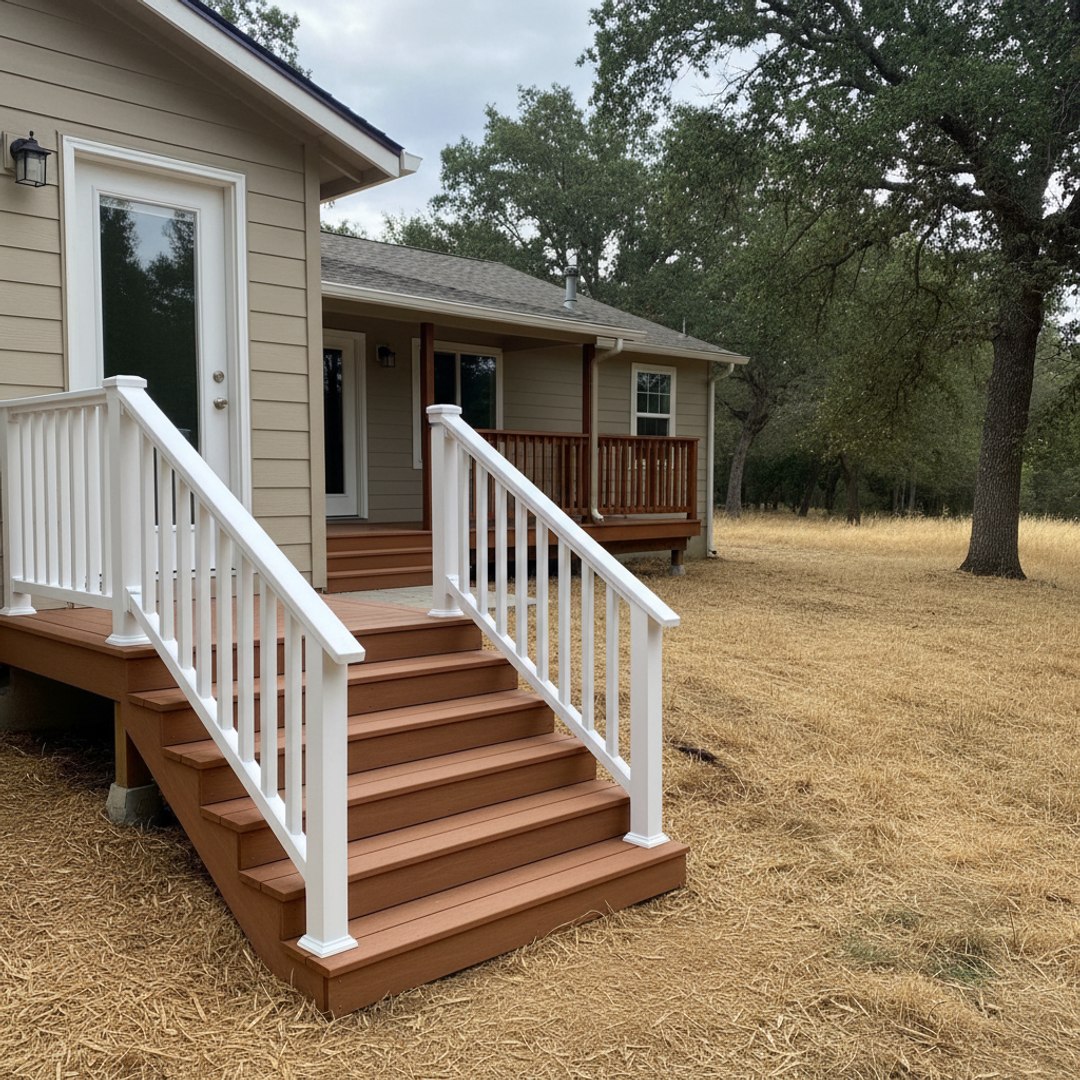
Anaheim gets over 400 decks and patio structures permitted a year across the county, and a fair number of them fail inspection the first time through because the builder skipped something basic. If you're about to hire someone to build, repair, or resurface a deck, the questions you ask before signing matter more than the sales pitch you get.
Here's what actually separates a builder worth hiring from one you'll be calling back in two years.
Start with the footings, not the decking
Everyone wants to talk about the boards on top. Composite versus wood, color, railing style. Fine, that stuff matters, but it's the last decision, not the first one. What holds the deck up is what you can't see once it's built.
Anaheim flatland soil is mostly sandy loam that drains reasonably well, but a lot of the hillside lots in Anaheim Hills and parts of East Anaheim sit on expansive clay that swells when wet and shrinks hard in a dry summer. A footing that's too shallow, or one poured without enough bell width at the bottom, will heave or settle unevenly on that soil over a few wet seasons. Ask your builder how deep they're going and why. In this area, 18 to 24 inches with a proper footing diameter is typical for a standard deck post, but soil conditions on your specific lot can push that deeper. If someone quotes a footing depth without ever mentioning your soil, they're guessing.
The other thing that fails constantly is the ledger board, the piece that bolts the deck to your house. It has to be lag-bolted or through-bolted into the rim joist, not nailed, and it needs flashing that sheds water away from the house framing. Skip the flashing and you get rot behind the siding within a few winters, especially with the heavier rain years Southern California has been getting in January and February. A deck that looks fine from the yard can be rotting into the house wall where nobody's looking.
License, insurance, and what that actually covers
Any contractor doing deck work over a certain value in California needs a C-13 or B license through the CSLB, and you can look that number up yourself in under a minute. Do it. Ask for their license number before the first meeting, not after you've picked colors.
Insurance is separate from licensing. You want to see proof of general liability and, if they have employees, workers' comp. If a worker falls off a ladder in your backyard and the company has no comp coverage, that claim can land on your homeowner's policy. Don't take someone's word for it, ask for the certificate.
What the permit process actually looks like here
Most deck work in Anaheim needs a permit through the city's Building Division if the deck is attached to the house or elevated more than 30 inches above grade. That threshold matters because it also triggers a guardrail requirement, generally 36 inches high with baluster spacing that a 4-inch sphere can't pass through, which is a code detail a lot of unpermitted decks get wrong.
A city inspector will typically want to look at the job at least twice: once after the footings are dug and before concrete goes in, and again at the framing stage before the decking boards cover everything up. If your builder is telling you permits aren't necessary, or that they'll "take care of it" without ever mentioning an inspection, that's a decision that comes back to bite you when you sell the house and the buyer's inspector finds a deck with no permit history on file.
If your lot is on a corner or backs onto an easement, a setback check is usually part of the plan review too. Older neighborhoods around the Anaheim Colony historic district sometimes have tighter lot lines than people realize, and a deck built too close to a property line can mean a stop-work order mid-project.
Reading a bid without getting fooled by it
A real bid names the lumber grade or composite brand, the fastener type, and the footing spec. It should say pressure-treated Douglas fir or a specific composite product line, not just "quality decking material." If the bid is one lump number with no material breakdown, ask for one. You want to know if you're getting galvanized joist hangers or stainless, because treated lumber reacts with plain steel over time and corrodes the hardware from the inside.
Be wary of a price that's dramatically lower than two or three other bids for the same scope. Somebody's cutting a corner, usually the one you won't see until the framing's already covered up. On the other end, watch for a contractor who wants a large deposit, more than the roughly 10 percent that's standard practice, or wants full payment before work starts. That's a red flag regardless of how good the samples look.
Also ask how long the job takes. A straightforward 300 to 400 square foot deck, once the permit is approved, usually runs one to two weeks of actual build time, weather and inspection scheduling aside. If someone promises it in two days, they're either not pulling a permit or not doing the framing right.
Older house, newer subdivision, different job
A deck project on a 1950s house in West Anaheim is a different job than one on a 1990s build in Anaheim Hills. Older homes often have rim joists that have taken decades of sun and irrigation overspray, and a builder should check that framing before bolting a new ledger to it. Newer subdivisions, especially ones inside an HOA, usually mean an architectural review on top of the city permit, so ask upfront whether your builder has dealt with your HOA before and knows what they'll ask for.
None of this is complicated once you know what to ask. It just takes someone willing to walk you through the footings and the flashing instead of the color swatches. That's the conversation we have with every homeowner before Charis Deck Solutions puts a shovel in the ground.